
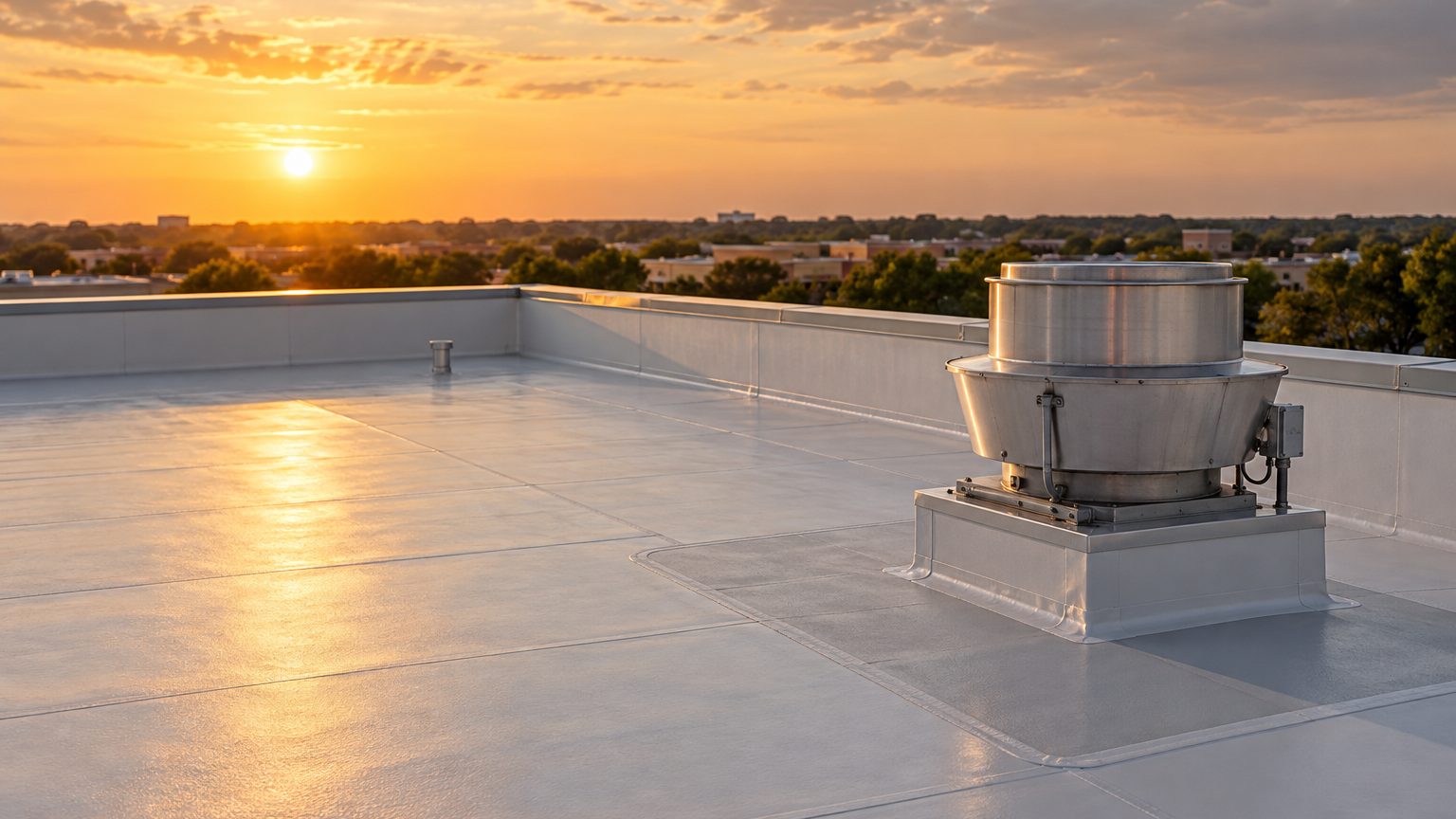
Roofing systems
PVC roofing.
A welded single-ply membrane that stands up to grease, oils and chemicals. The usual choice under restaurant exhaust and industrial vents.
What it is
Single-ply that resists what lands on it.
PVC (polyvinyl chloride) roofing is a reinforced thermoplastic sheet with hot-air welded seams, installed much like TPO. The difference is chemistry. PVC holds up to animal fats, cooking oils and many industrial chemicals that soften other membranes. It costs more than TPO, so specs usually call for it where those exposures exist.
The assembly
What goes on the deck.
At a glance
PVC in numbers.
- Product standard
- ASTM D4434
- Common thickness
- 50, 60 or 80 mil
- Seams
- Hot-air welded
- Attachment
- Mechanically fastened or fully adhered
- Resists
- Grease, oils and many chemicals
- Typical buildings
- Restaurants, food processing, labs, industrial
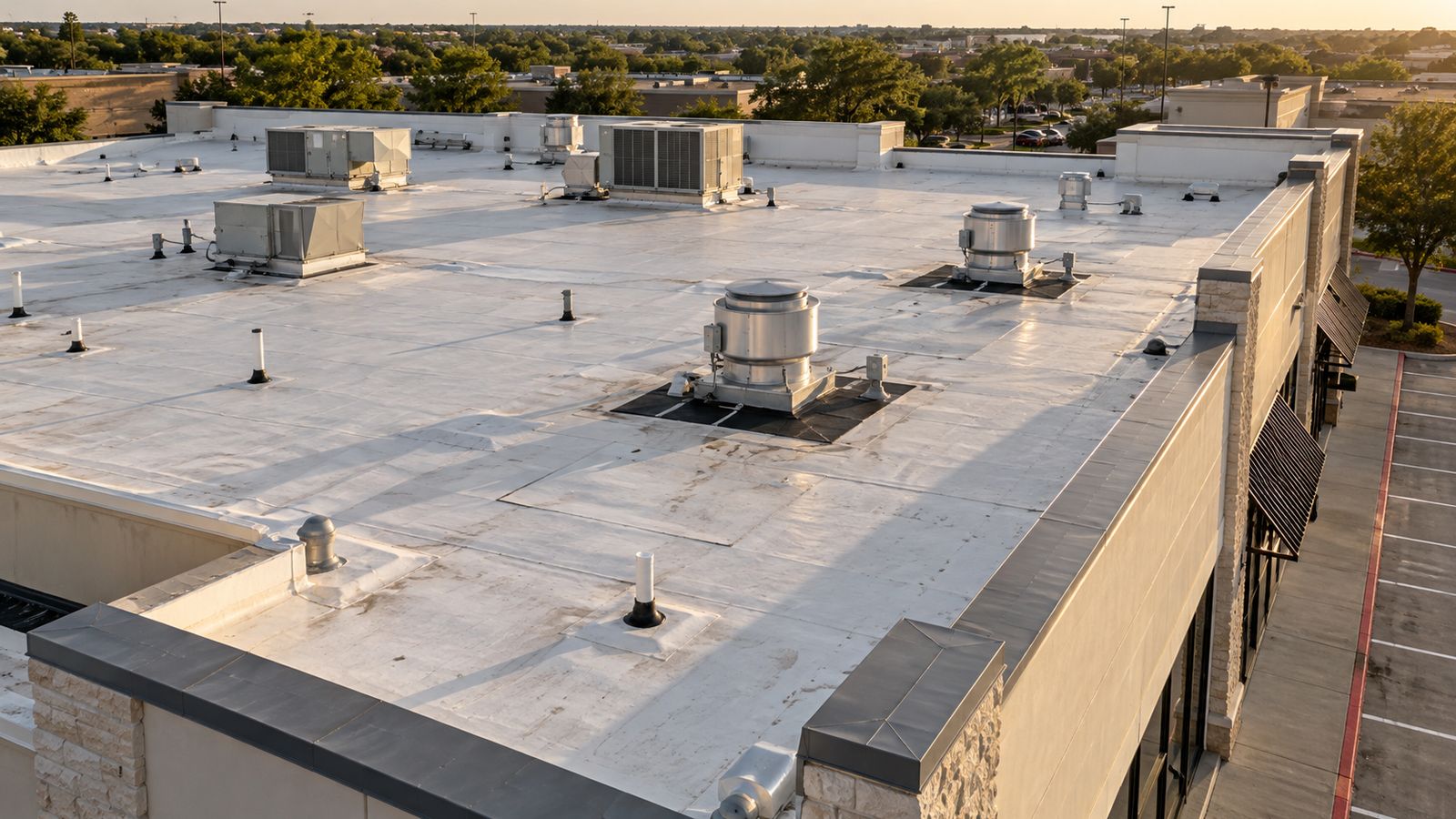
Where it fits
Best where exhaust and chemicals hit the roof.
- Restaurants and strip centers with kitchen exhaust fans on the roof
- Food processing and commercial kitchens
- Labs, hospitals and industrial buildings with chemical vents
- Roofs with heavy equipment traffic where welded seams matter
Grease containment around each exhaust fan protects any membrane and keeps grease off the drains. We price it with the fan curbs when the drawings show them.
In the field
Where PVC earns its cost
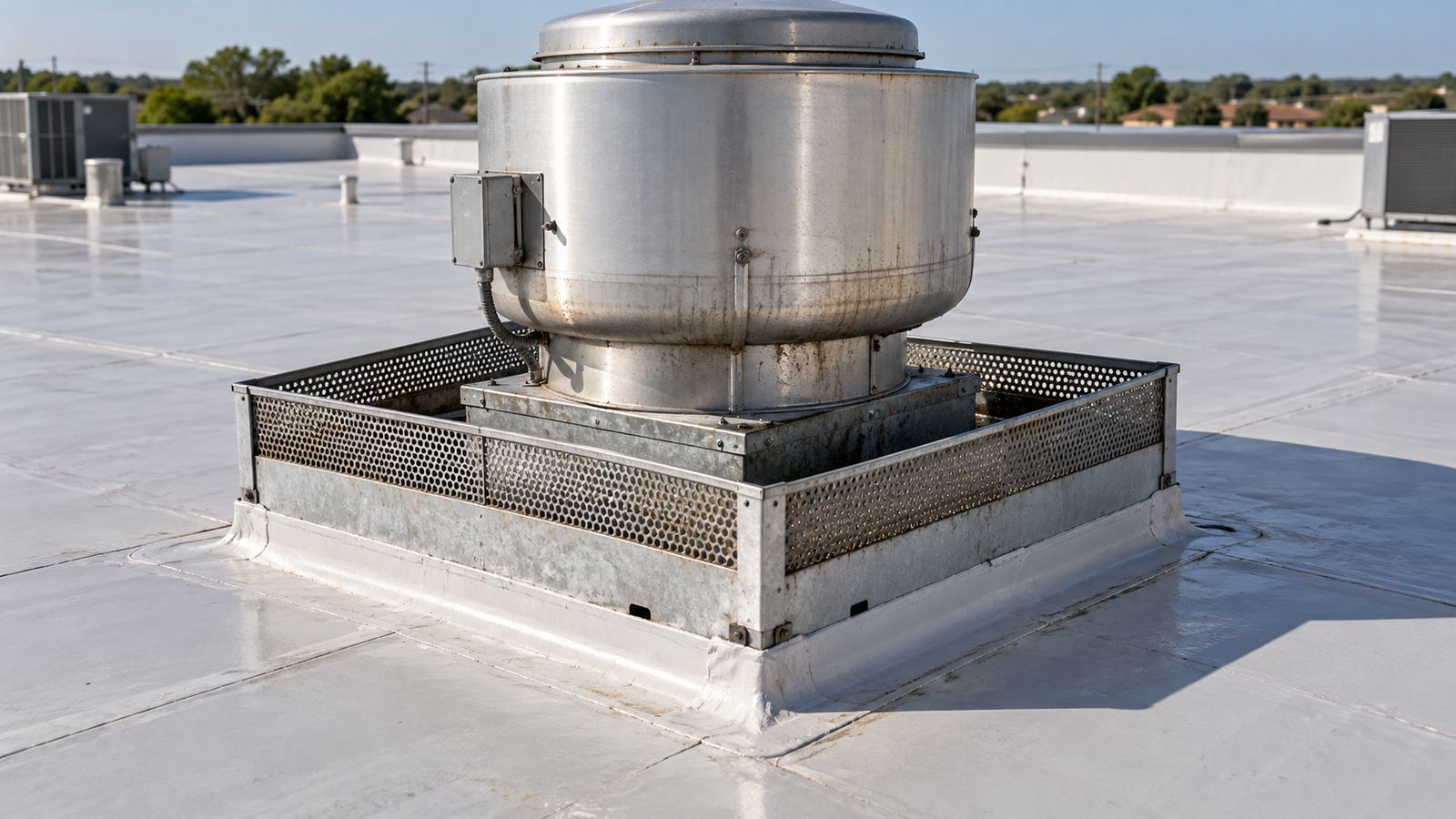
Grease containment at exhaust fans 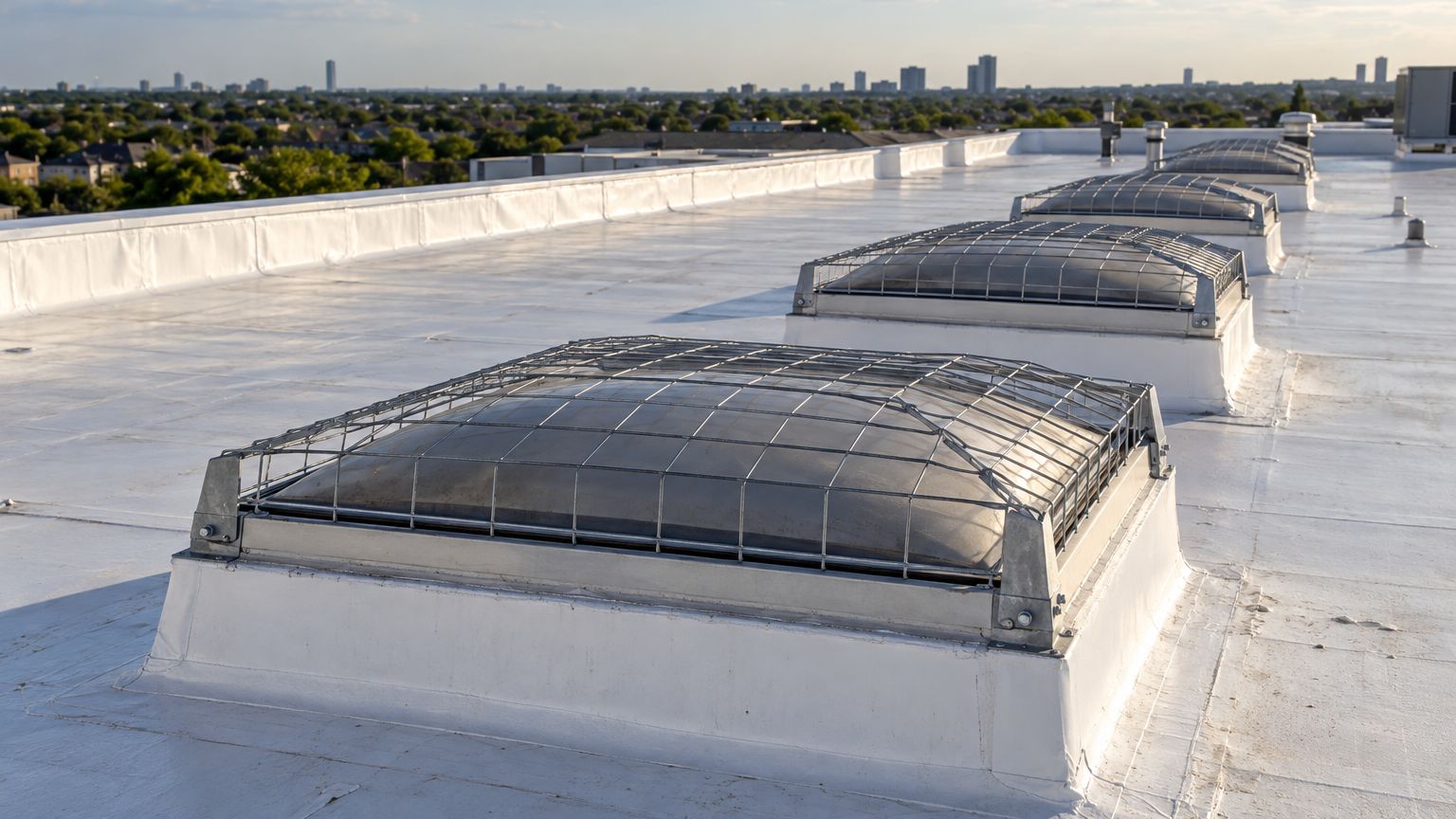
Curbs and skylights 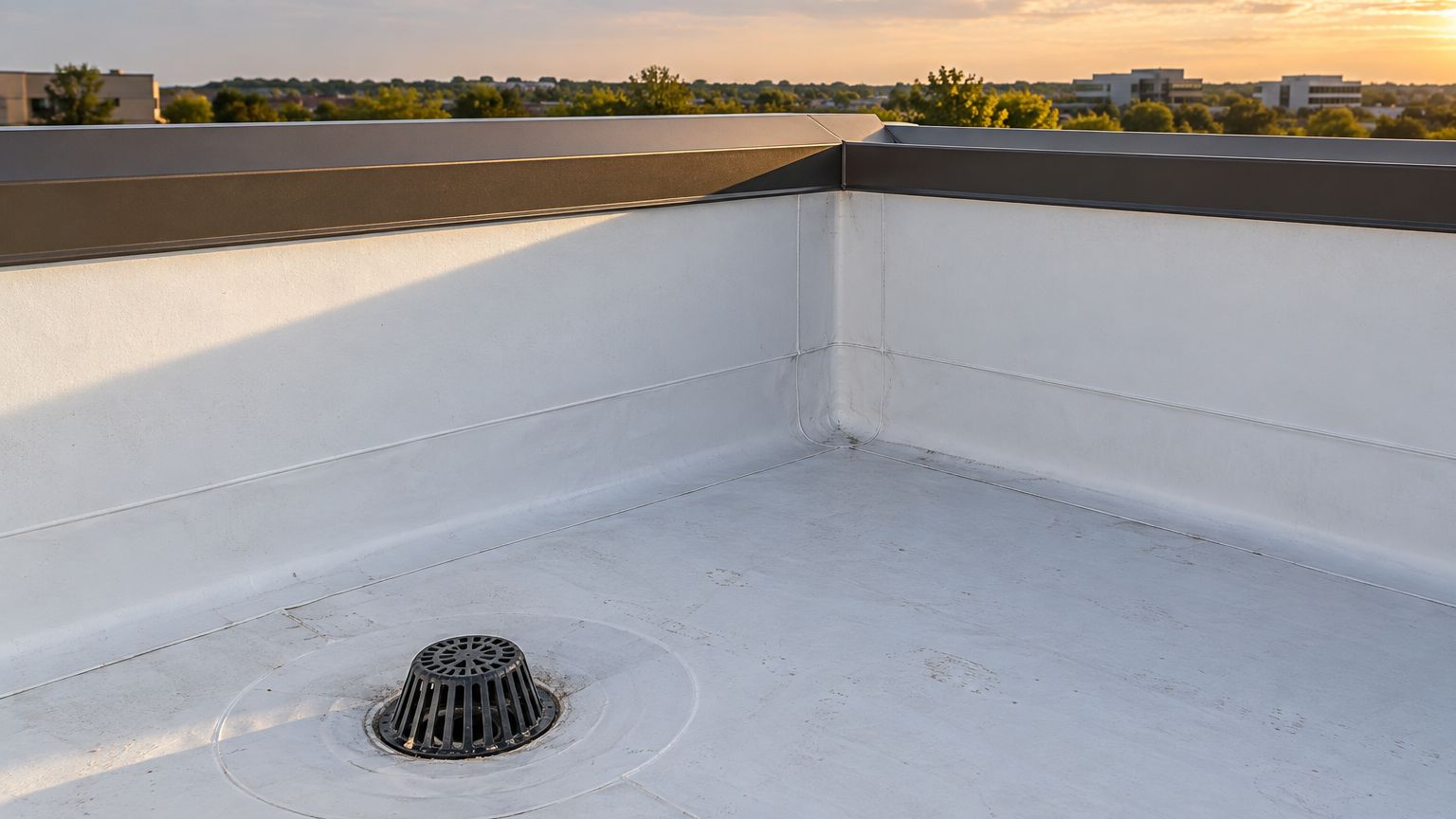
Parapet details
How we price it
Every curb and exhaust fan counted.
We read the mechanical sheets with the roof plan, because every exhaust fan and rooftop unit is a curb to flash. Field area, perimeter, curbs, drains and penetrations come off the drawings, and each is priced from our unit-cost database. Alternates such as a thicker sheet or added walkway pads are listed on their own lines.
FAQ
Questions GCs and owners ask.
PVC or TPO for a restaurant?
PVC, in most cases. TPO can degrade where grease from kitchen exhaust settles on it. When only part of a roof sees exhaust, some specs use PVC there and TPO elsewhere. We price whatever the spec names.
Does PVC need grease containment?
Yes. A grease trap or containment pad at each exhaust fan protects the membrane and keeps grease out of the drains. It is often shown on the mechanical or roof drawings.
Can PVC be welded to an existing TPO roof?
No. The two membranes do not weld to each other. A tie-in between them needs a detail the manufacturers approve, or a separation such as a curb or an area divider.
Related
Other single-ply systems and the details around them.
Pricing a roof under kitchen exhaust?
Send the invitation. Link the drawings and spec, give the bid date, and we'll confirm we have them and whether we're bidding.