Polyiso to the specified R-value, tapered systems and crickets that move water, and cover board under the membrane.
The layers
What sits under the membrane.
Vapor retarder, where the spec calls for one, usually over the deck
Polyiso insulation in one or two layers with staggered joints, so no joint runs straight through
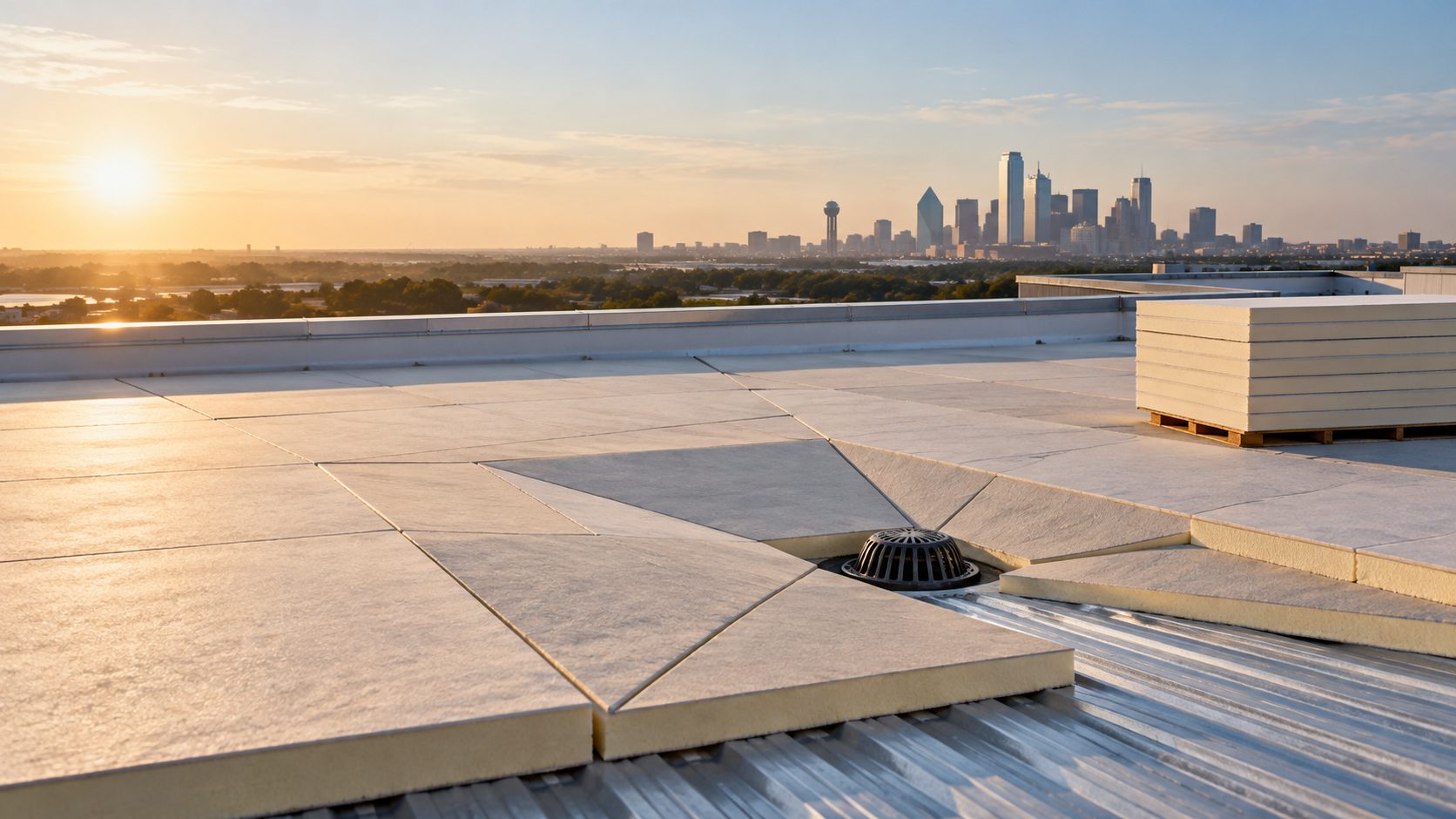
Tapered insulation that builds slope toward the drains
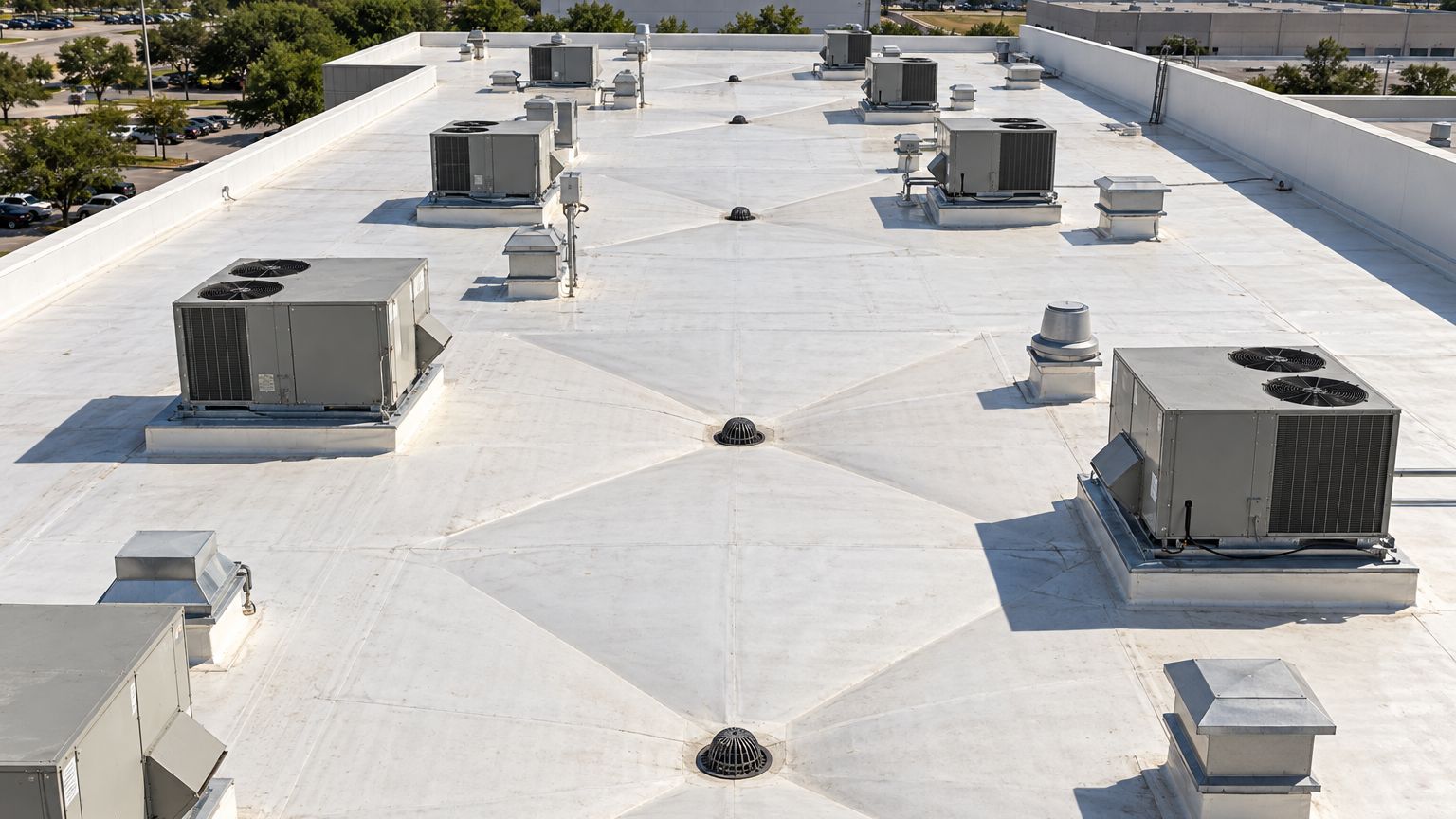
Crickets and saddles that turn water around curbs and between drains
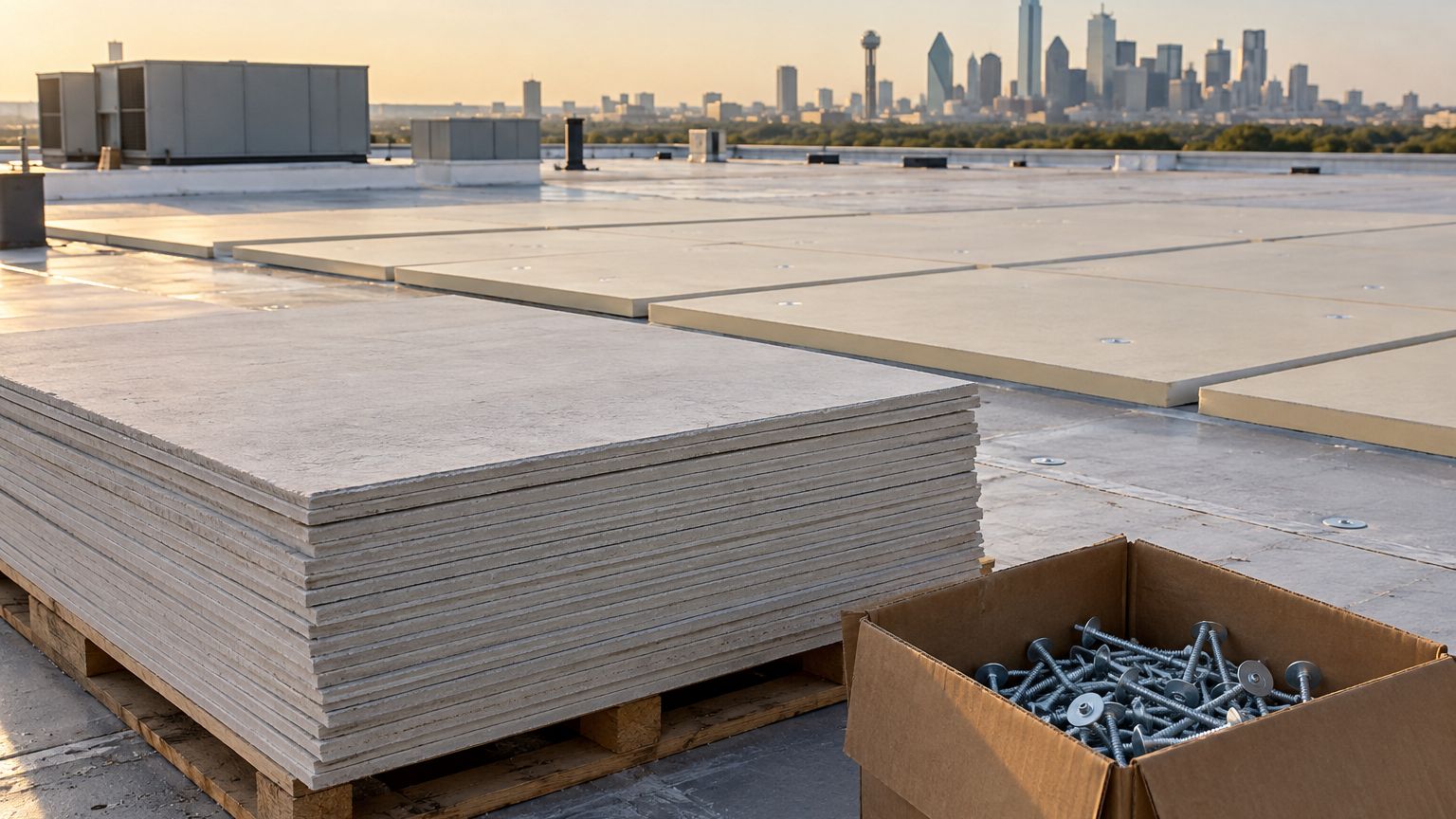
Cover board between the insulation and the membrane: high-density polyiso, gypsum or wood fiber, per the spec
How we work
Every roof starts as a bid.
01
From your drawings
Roof plans, details, mechanical sheets and the Division 07 spec.
02
Measured to scale
Quantities checked against a known dimension before they count.
03
Priced line by line
Each line from our own unit-cost database, alternates on their own.
04
Signed off
An estimator approves every proposal before it goes out.
A tapered system moves water to the drains before the membrane goes on.
Why it matters
Drainage and hail start here.
A flat roof is never truly flat. Ponding water past 48 hours shortens the life of any membrane and adds weight. A tapered system designed from the drain locations fixes that before the membrane is laid.
Cover board protects the foam from heat and foot traffic and gives the membrane a firm base against hail. In North Texas it is one of the cheapest ways to make a roof last.
The spec states the R-value and the energy code sets the minimum. On a tear-off, current code can require more insulation than the old roof had.
How we price it
By layer and by thickness.
Flat insulation is priced by area and thickness per layer. Tapered systems are priced from the taper layout, with crickets counted separately. Cover board, fasteners or adhesive are their own lines. If the drawings show only a minimum R-value, we state the thickness we priced.
In the field
Under and over the insulation
01
Crickets between drains
02
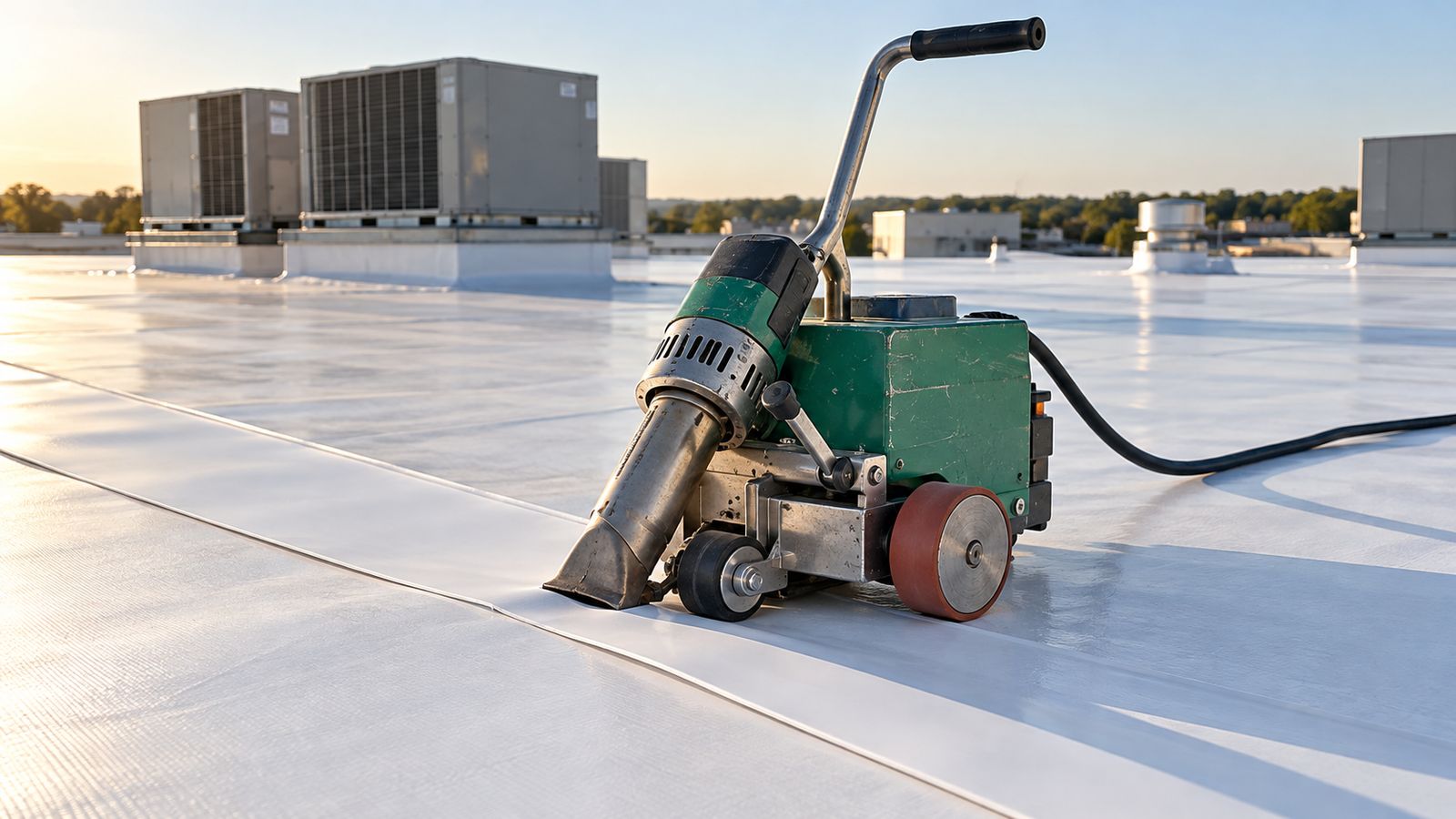
Membrane welded over cover board
03
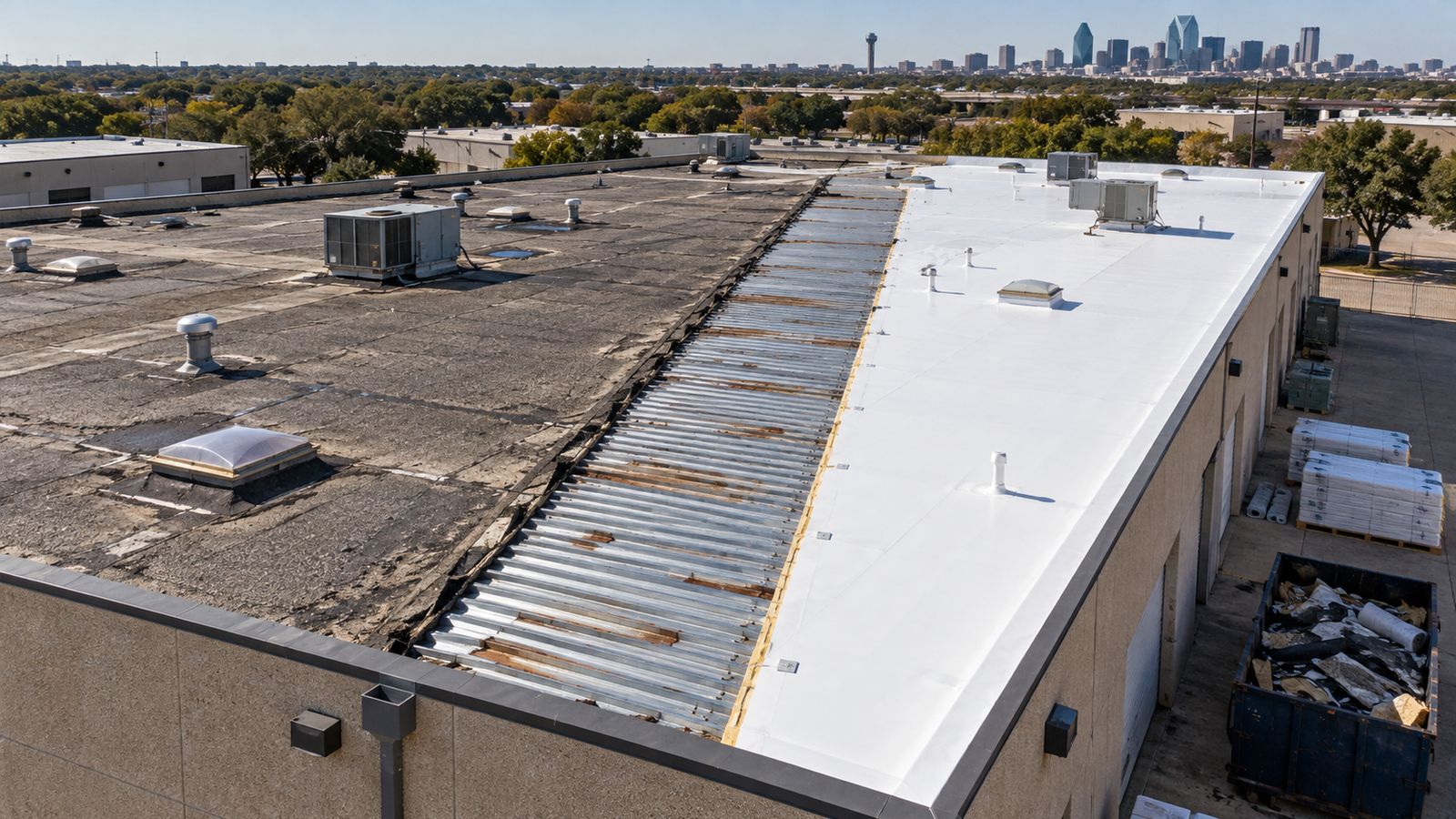
New layers after a tear-off
FAQ
Questions we get.
Why two layers of insulation instead of one?
Staggered joints stop heat from running straight through the gaps between boards, and they give a better surface for the next layer.
Do I need a cover board?
Not every roof requires one, but in hail country it is cheap insurance, and adhered systems often need one as the bonding surface. The spec decides.
Who designs the tapered system?
The tapered layout is usually prepared by the insulation manufacturer or supplier from the roof plan and drain locations, and reviewed with the submittals.